

Why Is My Generator Blowing Black Smoke During Runtime?
The short answer: generator black smoke during runtime indicates incomplete combustion. Degraded fuel, contaminated fuel, or fouled injectors from fuel quality problems are common causes. Black smoke means unburned carbon is exiting the exhaust, which wastes fuel and signals an engine under stress.

What Black Smoke Actually Means For Your Generator
Diesel combustion is supposed to be complete. Fuel and air mix, ignite, and convert to work. Black smoke means fuel did not fully combust. The unburned carbon particles are what you see as smoke.
A brief puff of black smoke at startup or during heavy load transitions is normal. Sustained black smoke during normal runtime is not.
How Fuel Quality Causes Black Smoke
Clean, properly refined diesel with good combustion properties burns efficiently. When fuel degrades or becomes contaminated, several things can disrupt that combustion:
- Injector fouling from microbial biomass or particulate contamination reduces atomization quality
- Degraded fuel with poor cetane causes delayed ignition and incomplete burn cycles
- Water in the fuel disrupts the fuel-air mixture and quenches combustion
- Excess fuel delivery from a governor hunting to compensate for inconsistent combustion
Other Causes Worth Ruling Out
Fuel is the most common and most overlooked cause. But black smoke can also come from:
- Air filter restriction limiting combustion air supply
- Overloading beyond rated capacity
- Worn injectors (which fuel contamination often accelerates)
The key diagnostic question is whether the smoking started suddenly or developed over time. Sudden onset after a recent fuel fill or after a long sit strongly points to fuel. Gradual onset over months may involve both fuel quality and mechanical wear.
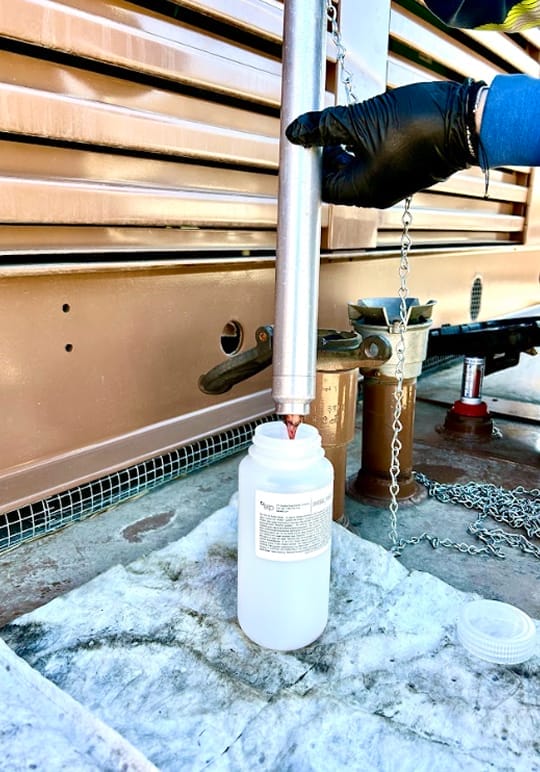
Why Standby Generator Fuel Is at Higher Risk
Generators that run only during outages and monthly exercise cycles carry fuel that sits for extended periods. Diesel begins to oxidize and degrade. Microbial contamination develops at the fuel-water interface. The fuel that looks fine at delivery looks different after six months in a tank.
Colorado’s temperature extremes accelerate this. Outdoor tanks cycle through heat stress in summer and cold stress in winter. Both conditions affect fuel stability.
What to Check First
- When was the fuel last tested or treated?
- Has there been a recent fuel delivery before the smoking started?
- When was the fuel filter last replaced?
- Is the smoke coming at startup only, or throughout runtime?
How Fleet Core Addresses Black Smoke Conditions
Fleet Core tests diesel fuel to identify degradation, contamination, and injection-affecting particulates. We polish fuel to remove contaminants, treat for combustion quality, and clean tanks when accumulated sludge is the source. Addressing the fuel before it causes injector damage is less expensive than addressing both.