


Your Equipment is Losing Power. But What is Really Causing it?
Spring construction season is back in full swing. Job sites are busier. Deadlines are tighter. And equipment is being pushed harder than it has been all winter.
But for many Colorado operators, something doesn’t feel right.
The excavator is sluggish under load. The generator isn’t producing full power. The truck is struggling on grades it handled fine last year.
Before you call the mechanic, ask one question first:
When did you last check your fuel quality?
Winter Operations Are Hard on More Than Your Equipment
Colorado construction crews don’t stop for winter. Neither do the conditions that quietly degrade your fuel quality.
Months of freezing temperatures, sharp daily temperature swings, and harsh Front Range weather take a toll on your entire fuel system. Here’s what builds up while you’re focused on keeping operations running:
- Water accumulation builds through repeated condensation cycles inside tanks as temperatures rise and fall daily.
- Microbial growth thrives at the water-fuel interface, producing bio-sludge that clogs filters and fuel lines.
- Fuel oxidation accelerates under cold-weather stress, breaking down diesel stability and reducing ignition quality.
- Sediment and particulate buildup accumulates in tanks and fuel systems pushed hard through demanding winter conditions.
The Result:
By the time spring construction season hits full stride, your fuel system is carrying months of hidden damage. And your equipment is already paying the price.
Power Loss Is a Symptom. Contaminated Fuel Is Often the Cause.
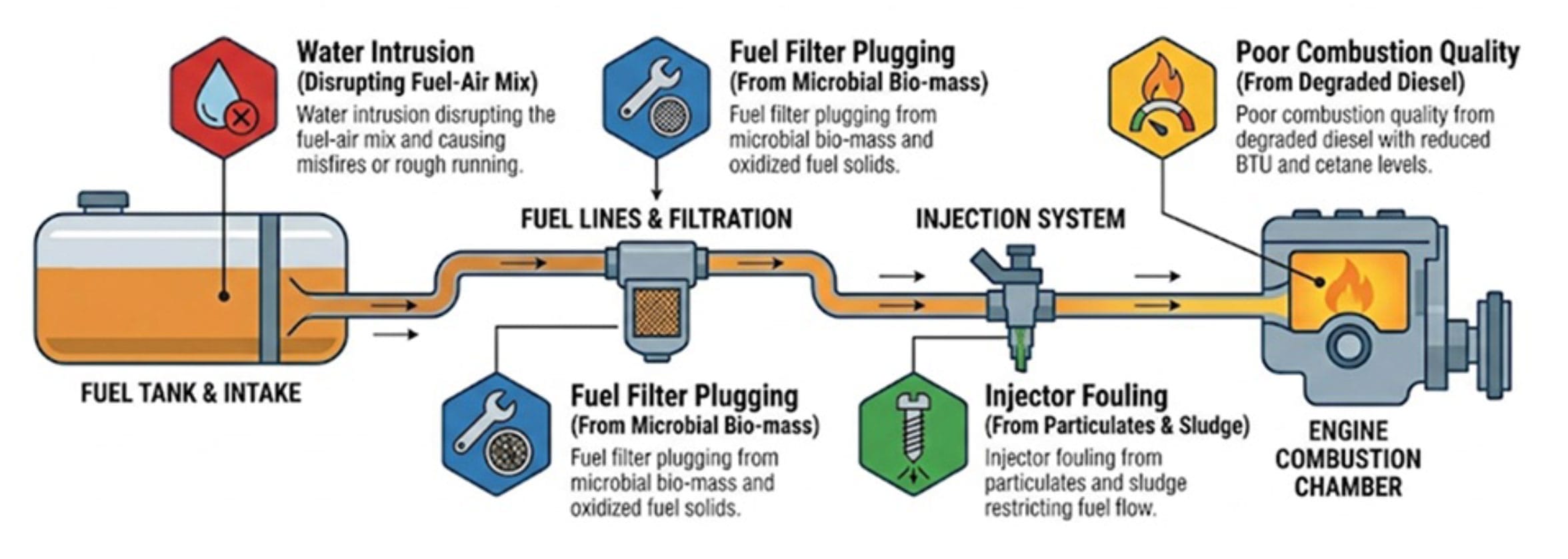
When construction equipment loses power under load, most operators go straight to mechanical diagnostics. But fuel-related root causes are far more common than people realize.
Injector fouling from particulates and sludge restricts fuel flow before combustion ever happens.
Fuel filter plugging from microbial bio-mass and oxidized fuel solids cuts off supply to the engine.
Poor combustion quality from degraded diesel with reduced BTU and cetane levels robs your machine of power.
Water intrusion disrupts the fuel-air mix and causes misfires or rough running.
Emergency service calls in the middle of a crisis
Each of these is a fuel problem. Not a mechanical one. And each one costs you time and money every day it goes undiagnosed.
What Underperforming Fuel Is Really Costing You
Power loss doesn’t just slow down the equipment. It slows down everything.
For operators managing multiple machines across multiple job sites, the compounding effect of contaminated fuel can quietly drain margins across an entire season. Long before a single piece of equipment fully fails, you’re absorbing the cost through:
Reduced output per machine per shift
Higher maintenance frequency and parts replacement
Crew time lost while equipment is diagnosed and repaired
Project timelines pushed back across multiple sites
Emergency service costs that reactive repairs always bring
A Fuel Readiness Checklist for Construction Season
Spring project schedules don’t leave room for fuel-related surprises. Before the season hits full stride, run through this checklist:
Test diesel for water, microbial growth, oxidation, and particulate levels accumulated over winter operations
Polish or remediate any fuel showing signs of degradation or contamination
Clean tanks before refilling with fresh seasonal fuel
Inspect and replace fuel filters before ramping up equipment hours
Establish a scheduled fueling and monitoring cadence for the active season
Brief your site managers on early warning signs of fuel-related performance issues
Protect Performance Before the Season Gets Away From You
Fleet Core’s FleetCore360 is an Integrated Fuel Asset Management System built to catch the fuel problems that cost Colorado construction operations their most productive months.
CoreGuard Protection
Covers comprehensive diesel fuel testing to identify contamination, water intrusion, and degradation before it reaches your equipment. It includes fuel polishing to restore fuel to operational standards and tank cleaning and ongoing maintenance to keep your fuel system clean all season long.
CoreMax Performance
Delivers additive booster programs that improve combustion quality, restore fuel efficiency, and protect injectors and fuel systems under the heavy-load demands of active construction.