

Colorado’s elevation and climate vary dramatically by region. That variation directly determines what goes wrong with diesel fuel and when. The Eastern Plains deal with oxidation and water accumulation from heat and temperature swings. The Front Range faces year-round operational stress and particulate contamination from wildfire smoke. The Western Slope combines high-desert UV degradation with remote location risk. The San Luis Valley has the longest cold season of any agricultural region in the state, making fuel gelling a risk for six months or more. No single fuel management program works across all four regions. Where you operate determines what your fuel problems are.
Colorado is not one climate. It is five or six, stacked on top of each other by elevation.
That matters if you run equipment here. The fuel problems a potato farmer in the San Luis Valley deals with in October look nothing like what a sod farm on the Front Range faces in July. Same state. Completely different fuel failure modes.

Diesel degrades differently in each region, your fuel management program needs to reflect where you operate.
Western Slope: 4,500 to 6,500 Feet
High-desert heat and UV degrade diesel faster than operators expect. Remote locations mean longer response times when equipment fails, raising the cost of every preventable breakdown.
The Western Slope runs from Grand Junction east into the mountains. Fruit orchards. Livestock operations. High-desert conditions.
Dry heat and high UV at this elevation are harder on diesel than operators typically account for. The low humidity that makes the climate comfortable for people is bad for fuel storage. Evaporation affects lighter fuel fractions. Heat accelerates oxidation. Fuel that looks fine can be significantly degraded in a tank that has been sitting through a Western Slope summer.
The more serious operational risk is remoteness. When a fuel-related equipment failure shuts down an irrigation pump or a piece of harvest equipment on the Western Slope, the response time is longer. Parts are harder to come by. Technicians are farther away.
That makes preventive fuel management more valuable here than almost anywhere else in the state. The cost of a failure is not just the repair. It’s the downtime, the lost crop risk, the logistical difficulty of getting help to a remote location.
Common fuel failures on the Western Slope:
- Accelerated oxidation from heat and UV in high-desert conditions
- Fuel degradation during off-season storage
- Equipment failures in remote locations with long response times
- Sediment buildup in tanks that go uninspected between growing seasons
Front Range Corridor: 5,000 to 6,000 Feet
Rapid weather changes, intense UV exposure, and wildfire smoke create year-round contamination risk. Continuous operations leave no window to catch problems before they become failures.
The Front Range is where Colorado’s population concentrates. It’s also where you find the largest sod farm operations in the state, along with construction fleets, municipal equipment, and commercial operations that run year-round.
Weather changes fast here. A 70-degree afternoon can turn into a hailstorm inside of two hours. UV exposure at this elevation is intense. Equipment and exposed fuel systems take a beating that operators from lower elevations don’t anticipate.
Wildfire smoke is an increasing factor. When smoke events move through the region, particulate contamination enters fuel systems that aren’t sealed properly. That’s especially true for equipment left outdoors with vented tanks.
The bigger structural problem is continuous operation. Front Range fleets often run without meaningful maintenance windows. Growing season demand on sod farms pushes equipment hard from spring through fall. Fuel quality doesn’t get checked because nobody has time.
That’s when contamination compounds quietly. Dirty fuel becomes a maintenance emergency rather than a manageable condition.
Common fuel failures that we see on the Front Range:
- Particulate contamination from wildfire smoke events
- UV degradation of fuel in exposed above-ground tanks
- Deferred fuel testing and polishing during peak operating seasons
- Water intrusion from rapid weather changes and hailstorms
San Luis Valley: 7,500 Feet and Above
The short answer: The San Luis Valley has the longest cold season of any major agricultural region in Colorado. Fuel gelling in standard No. 2 diesel is a risk from early fall through late spring. Untreated fuel in irrigation and generator equipment at this elevation is not a viable strategy.
The San Luis Valley is one of the highest agricultural valleys in the United States. Potato operations, hay production, and extensive irrigation infrastructure depend on equipment that has to run in conditions that arrive earlier and stay longer than operators at lower elevations plan for.
Fuel gelling happens when paraffin wax in diesel crystallizes at low temperatures. The cloud point for standard No. 2 diesel is around 14 degrees Fahrenheit. The cold filter plugging point is lower. In the San Luis Valley, temperatures can fall below those thresholds as early as September and stay there through April or May.
That’s a large portion of the year when untreated No. 2 diesel is a risk.
Potato operations depend heavily on irrigation infrastructure. Generators and pump systems that are expected to run through cold snaps cannot afford gelled fuel. A generator that won’t start during a cold weather event is not just an inconvenience. It’s a potential crop loss situation.
At this elevation, winter prep is not optional. It’s a fuel management requirement.
Common fuel failures in the San Luis Valley:
- Fuel gelling in standard No. 2 diesel during fall, winter, and early spring
- Cold filter plugging on irrigation and generator equipment
- Water contamination that freezes in fuel lines
- Extended cold seasons that compress available maintenance windows
What temperature does diesel gel in Colorado? Standard No. 2 diesel begins to cloud around 14 degrees Fahrenheit and can gel completely near 0 degrees Fahrenheit. In the San Luis Valley, those temperatures arrive well before most operators expect them. Blended winter fuel or cold-flow additives should be in place before the first hard freeze.
Eastern Plains: 3,500 to 5,500 Feet
Heat accelerates fuel oxidation. Wide day-to-night temperature swings cause water accumulation in long-term storage tanks.
The Eastern Plains are Colorado’s largest agricultural zone. Wheat, corn, cattle operations. Big tanks. Long storage periods between crop cycles.
Summer heat on the plains is aggressive. Temperatures push well past 90 degrees Fahrenheit for extended stretches. In a large-capacity field tank sitting in direct sun, that heat accelerates diesel oxidation. Fuel breaks down faster than operators expect because they’re comparing it to cooler storage conditions elsewhere.
Then the temperature swings hit. Day-to-night differentials on the plains can run 30 to 40 degrees or more. That thermal cycling pulls moisture into the tank. Warm air expands and escapes through vents. Cooler overnight air draws back in, carrying humidity. Repeat that cycle over weeks or months of storage and you get significant water accumulation at the bottom of the tank.
Water is where microbial growth starts. It’s also where injector damage begins.
Common fuel failures on the Eastern Plains:
- Fuel oxidation in tanks stored through the off-season
- Water accumulation from day-to-night temperature cycling
- Microbial contamination in long-term storage tanks
- Sediment and sludge buildup in tanks that rarely get inspected
If your equipment sits idle for months between seasons, your fuel is aging the entire time. Diesel has a usable shelf life. On the plains, heat shortens it.
Why Regional Context Changes Your Fuel Program
The short answer: Elevation, temperature range, seasonal changes, and operational patterns are all different across Colorado’s agricultural regions. A fuel management program that fits one region can leave another completely unprotected.
A winter additive protocol designed for a Front Range sod operation is not the same as one designed for a San Luis Valley potato farm. The elevation difference alone is more than 1,500 feet. The temperature exposure is significantly different. The seasonal duration of risk is different.
What works for fuel storage on the Eastern Plains, large tanks with long seasonal gaps requires a different inspection and treatment schedule than what a Western Slope orchard operation needs.
What protects a Front Range fleet running equipment continuously is not what protects irrigation equipment that sits idle for months at 7,500 feet.
The questions worth asking about your operation:
- How long does your fuel sit in storage between uses?
- What are the temperature extremes at your location?
- What is your elevation, and how does that affect UV exposure and cold-weather risk?
- When did you last test your stored fuel?
- What is your protocol before winter, and does it match your actual climate conditions?
Fuel Testing Is the Starting Point
Before you build a fuel treatment or maintenance program, you need to know what you are working with.
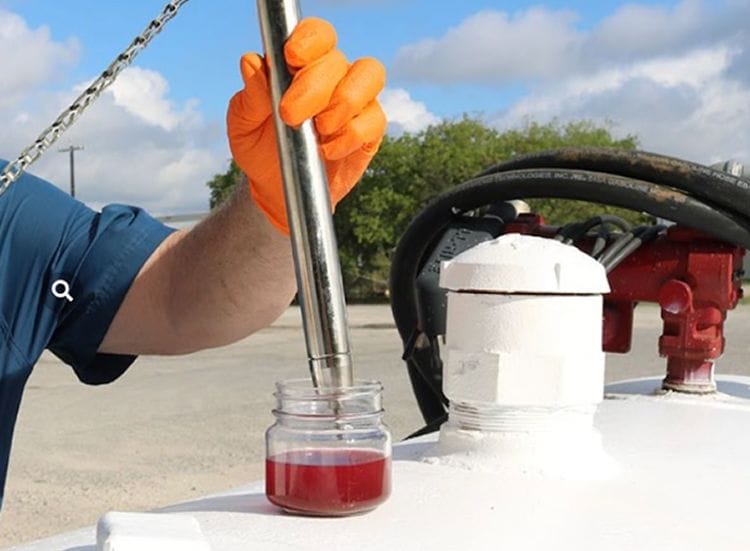
A fuel test tells you the actual condition of what is in your tanks right now. Microbial contamination. Water content. Sediment levels. Fuel stability. Those results are different in every region, and they change over time based on storage conditions.
Fleet Core provides fuel testing, fuel polishing, and fuel delivery across Colorado’s Front Range and surrounding agricultural regions. We work directly with operators. No brokers. No intermediaries.
If you want to know what your fuel looks like and what your regional conditions are doing to it, we can help you find out.
Contact Fleet Core to schedule a fuel test or learn more about our services.