

What to Do When Diesel Fuel Testing Confirms a Problem
Choosing Between Diesel Fuel Polishing, Cleaning, and Treatment Solutions
When fuel testing confirms a problem, you have three main paths forward. Polish the fuel. Clean the tank. Pump it out and replace it. Most real situations call for some combination of the three.
Fleet Core are the fuel experts that can help you decide which path fits your situation. The right choice depends on what’s wrong with the fuel, what shape the tank is in, how much downtime you can afford, and how soon you need the equipment running again.

The Three Main Approaches: Polishing, Cleaning, Replacement
Each approach solves a different problem.
Mixing them up wastes money and time.
Fuel polishing removes water, particulates, and microbial contamination from the fuel itself. It runs the fuel through filtration and separation equipment, returning cleaned fuel to the tank. Polishing works best when the fuel is salvageable and the tank is in reasonable condition.
Tank cleaning addresses the inside of the tank. Sludge, biofilm, rust, and accumulated debris on tank walls and bottoms get removed mechanically. Tank cleaning is necessary when the tank itself is the contamination source.
Pump-out and replacement removes all the fuel and replaces it with fresh product. This is the right call when fuel has degraded past recovery, when oxidation has dropped cetane too far, or when the contamination is too severe for polishing to handle economically.
These approaches often work in sequence. Polish the fuel first to extend the time you have to plan. Clean the tank to stop the contamination at its source. Replace the fuel when polishing won’t bring it back to spec.
Fuel Polishing: What It Does and Doesn’t Solve
Fuel polishing is the most common and most cost-effective treatment for typical fuel quality problems. It’s also the most misunderstood.
What polishing does well
- Removes free and emulsified water down to acceptable levels
- Filters out particulates and sediment
- Knocks down microbial populations when paired with biocide
- Restores cloudy or hazy fuel to clear condition
- Recovers fuel that has stratified during storage
What polishing cannot do
- Reverse oxidation that has already occurred
- Restore cetane that has dropped through aging
- Fix tank-side contamination that will reintroduce problems
- Remove dissolved water at the molecular level
- Recover fuel that has degraded past chemical recovery
Polishing is a maintenance and recovery tool, not a magic fix. When the underlying conditions stay the same, polished fuel will degrade again. That’s why polishing without addressing the source rarely holds.
Tank Cleaning: When the Tank Itself Is the Problem
Tank cleaning becomes necessary when the inside of the tank has become a contamination source. A few signs point to this.
Polishing results that don’t hold. If you polish a tank’s fuel and contamination returns within weeks or months, the tank is reseeding the fuel.
Visible sludge on dipsticks or sample bottles. Heavy black or brown sediment indicates accumulated biological and particulate buildup that polishing alone won’t reach.
Rust or scale evidence. Older steel tanks develop interior corrosion that flakes into fuel and seeds particulate problems.
Microbial recurrence after biocide treatment. When biocide knocks down microbes but they come back, biofilm on tank walls is harboring the next generation.
Long-stored or inherited tanks. Tanks that have sat unused, changed hands, or never been cleaned often need a full interior cleaning before any other treatment will hold.
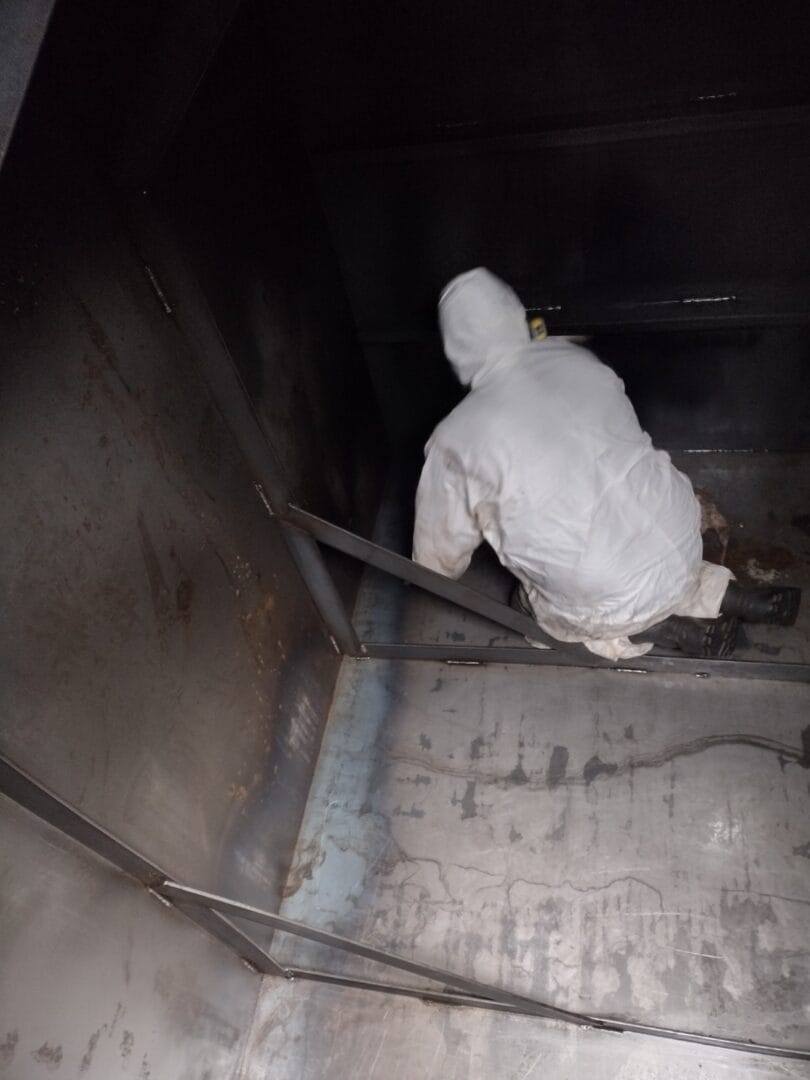
Tank cleaning is more involved than polishing. It typically requires draining the tank, mechanical or manual cleaning of the interior, removal of sludge and debris, and inspection before refilling. The downtime is real but the result is a tank that holds clean fuel.
Pump-Out and Replacement: When Fuel Is Beyond Recovery
Some fuel can’t be saved. Recognizing when to stop trying matters.
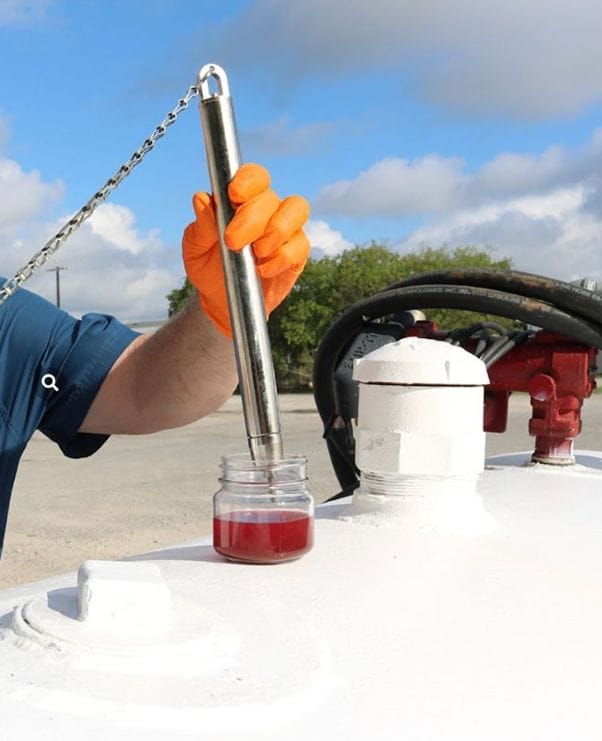
Fuel that has oxidized severely shows up as dark color, sour or solvent-like odor, and acid numbers well above ASTM thresholds. Polishing won’t reverse oxidation. The chemistry has already changed.
Fuel that has lost cetane through long storage may pass other tests but cause hard starting and rough running across all equipment using it. Cetane improvers help marginally but won’t restore badly degraded fuel to spec.
Fuel with severe contamination that polishing would take many passes to address may be cheaper to replace than to recover. The math depends on volume, fuel cost, polishing time, and equipment availability.
Pump-out is straightforward in execution. The challenge is usually disposal of the contaminated fuel, which has regulatory requirements that vary by quantity and condition. Working with a supplier who handles this regularly removes that complication.
Combined Approaches and Sequencing
Real fuel problems rarely fit neatly into one category. Most operations benefit from combinations.
A common sequence for moderately contaminated fuel in a moderately degraded tank: polish the fuel to make it usable for current operations, schedule tank cleaning for the next planned downtime, treat with biocide as part of the polishing pass, monitor with follow-up testing.
A common sequence for severe contamination: pump out the existing fuel, clean the tank thoroughly, refill with fresh fuel, treat preventively, establish a testing schedule going forward.
A common sequence for standby generators with aged fuel: test the fuel, polish if salvageable, clean the tank if buildup is present, plan for full replacement on a multi-year schedule based on usage and conditions.
The right sequence saves money compared to executing each step independently. It also minimizes downtime by handling related work in the same service window.
Cost, Downtime, and Decision Factors
The honest comparison between approaches comes down to a few factors.
Polishing is typically the lowest cost per gallon and produces minimal downtime. Equipment can often stay in service while polishing runs. The fuel stays in place. Best for routine maintenance and moderate contamination.
Tank cleaning costs more and requires the tank to be out of service during the cleaning window. The investment is one-time per tank but the result is durable. Best when the tank is the source of recurring problems.
Replacement costs the most because it includes both removal and disposal of old fuel and purchase of new fuel. Downtime depends on volume and access. Best when fuel quality has degraded past recovery or when starting clean is more economical than incremental treatment.
The decision factor most operators underweight is recurrence. A cheaper treatment that won’t hold costs more in the long run than a more thorough treatment that solves the underlying problem. We’ve seen operations spend three years polishing fuel that should have been replaced once, year one.
Testing before treatment helps avoid this. A clear picture of what’s wrong points to the right combination of approaches.
Why Working With a Direct Supplier Matters
Treatment and remediation work better when the people doing it can also test, deliver, and maintain the fuel afterward.
Fleet Core handles testing, polishing, tank cleaning, and direct delivery as integrated services. That changes how problems get solved. We can test a tank, polish the fuel, clean the tank if needed, refill with fresh product, and put the operation on a maintenance schedule, all without coordinating across multiple vendors.
It also changes accountability. When one company handles the full chain, there’s no finger-pointing when something doesn’t go right. We own the outcome from the testing through the next delivery and beyond.
Owner-operated direct supply also means no broker markups on the fuel itself or the services around it. The pricing reflects actual work and actual fuel, not layers of margin between you and the source.
Common Problems Diesel Fuel Testing Confirms
Fuel testing typically points to one of five underlying issues, each with its own cause and its own fix:
- Water contamination: free or emulsified water from condensation, delivery, or a compromised tank.
- Microbial growth (diesel bug): bacteria and fungi that colonize trapped water and form protective biofilm.
- Sludge & sediment: accumulated debris, rust, and biological buildup that reseeds contamination polishing can’t reach.
- Fuel oxidation (cetane loss): chemical aging that degrades fuel quality and can’t be reversed by filtration.
- Diesel gelling: wax crystallization in cold weather, a seasonal fuel property rather than contamination.
