

Diesel Bug: Why Microbial Contamination Keeps Coming Back
Diesel bug is the common name for microbial contamination in fuel, caused by bacteria and fungi that live at the interface between water and fuel. They form a protective layer called biofilm on tank walls, which is why biocide treatment alone often doesn’t hold. If microbes keep coming back after treatment, the tank itself is harboring them, not just the fuel.
What The Diesel Bug Actually Is
“Diesel bug” isn’t one organism. It’s a general term for the bacteria and fungi that colonize diesel fuel systems, almost always at the boundary between water and fuel. These microorganisms don’t live in the fuel itself. They live in water that’s collected in the tank, and they feed on hydrocarbon components in the fuel that touches that water layer.
There is a fuel standard called ASTM D6469 that exists because microbial contamination is one of the most overlooked causes of fuel system failure. It’s invisible until it isn’t, and by the time it’s visible, it’s usually established enough to require more than a quick fix.
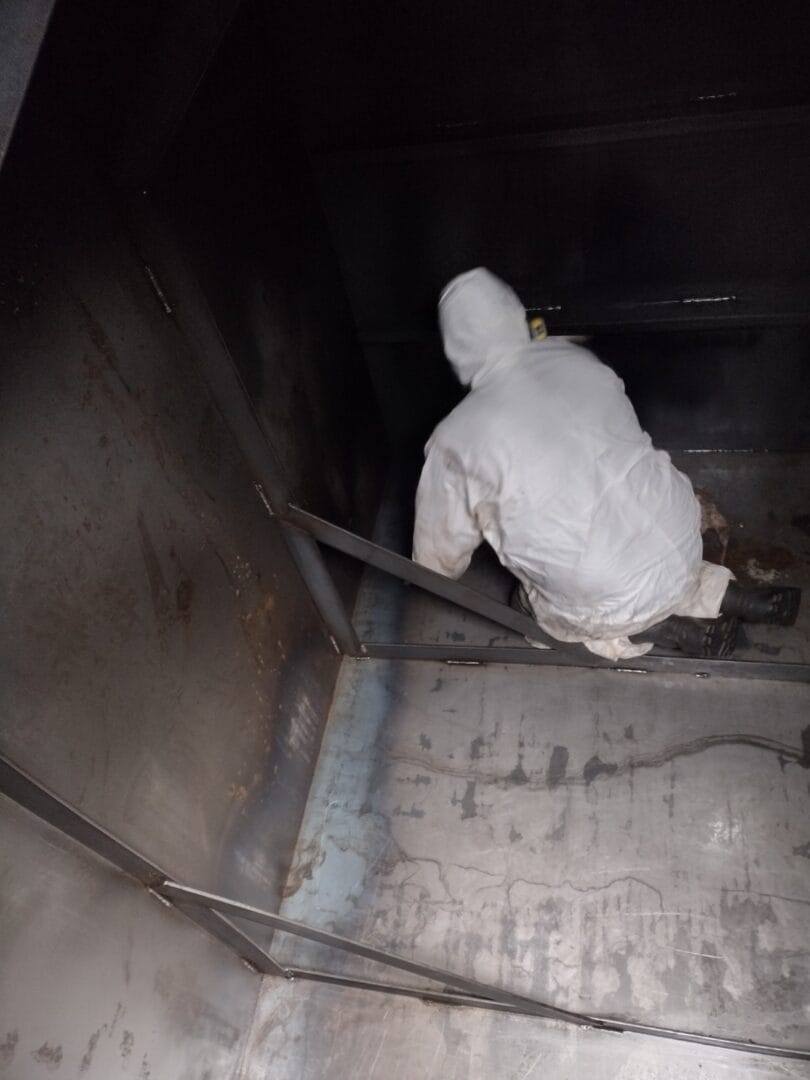
Microbial contamination requires more than fuel polishing to ensure it doesn’t come right back. Fuel tank cleaning and preventitive maintenance is the best medicine for healthy diesel fuel.

Water intrusion and condensation is the first step to microbial growth.
Where Diesel Bug Comes From
Microbial contamination requires water, and water gets into diesel through condensation, tank breathing, and delivery contamination. Once water is present, airborne and fuel-borne microorganisms find their way to that water layer and begin colonizing it. This is why water contamination and microbial contamination are almost always discussed together. One causes the other. Our guide on water in diesel fuel covers how water gets in and how to detect it early.
How Diesel Bug Shows Up
Sludge is the most visible sign. Dark, slimy accumulation at the tank bottom or on dipsticks is often more biological than mineral, a mix of microbial mass, dead cells, and the particulate they trap. Fuel filters clogging faster than usual, sometimes within days of a fresh filter change, point to active biomass shedding into the fuel stream. A sour or rotten-egg smell can indicate anaerobic bacterial activity, particularly sulfate-reducing bacteria. And accelerated pitting corrosion on tank walls or fuel system metal happens because microbial metabolism produces acidic byproducts that eat into steel faster than clean fuel would.
Why Biocide Alone Often Doesn’t Hold
This is the part that surprises most fleet operators. Biocide treatment kills the microbial population that’s actively growing in the fuel and water phase. It does not reliably reach organisms protected inside biofilm.
Biofilm is a physical structure, not just a colony. A biofilm layer as thin as one millimeter on a tank wall can be a hundred times thicker than the fungi within it and up to a thousand times thicker than the bacteria, and that thickness is enough to shield the organisms inside from biocide exposure. The biocide kills what it touches. What’s buried under the film survives, and it repopulates the tank once the treatment’s effect fades.
This is why microbial recurrence after biocide treatment is one of the clearest signals that tank cleaning, not another round of biocide, is what’s actually needed. Our guide on sludge, sediment, and tank corrosion goes deeper on what’s accumulating on tank walls and why it needs to be physically removed.
The Real Cost of Letting Diesel Bug Run
Microbial contamination doesn’t just make fuel look bad. It clogs filters, which increases maintenance frequency and cost. It accelerates tank corrosion through acidic metabolic byproducts, which shortens tank life and can eventually compromise structural integrity. And it degrades fuel quality over time, contributing to the kind of oxidation and quality loss covered in our guide on fuel oxidation and cetane loss. Left unaddressed, what starts as an occasional clogged filter becomes a pattern of unplanned equipment downtime.
Treating Diesel Bug the Right Way
The sequence matters. Test first to confirm microbial contamination and understand its severity, since not every sludge or odor complaint turns out to be biological. Polish and treat with biocide to knock down the active population and clean the fuel currently in the tank, which is the right first move when contamination is caught early and hasn’t recurred. Clean the tank when biofilm is present, meaning contamination has recurred after biocide treatment, when sludge is visible, or when the tank has a long history of untreated fuel. This physically removes the biofilm that biocide can’t reach.
For tanks with a documented pattern of recurrence, treating tank cleaning as the baseline rather than the last resort saves money over time. Repeated biocide treatments on a tank with established biofilm is a cycle, not a fix, and it costs more in the long run than a single thorough cleaning.
Preventing Diesel Bug From Establishing
Controlling water is the highest-leverage prevention step, since microbes can’t establish without it. Beyond that, routine testing catches microbial growth before it reaches biofilm-forming levels, and a fuel management schedule that keeps tanks turning over regularly limits the still, low-oxygen conditions microbes favor.

The Bottom Line
Diesel bug is a water problem that becomes a biofilm problem if it’s not caught early. Biocide treats the symptom. Tank cleaning treats the cause once biofilm is established. Knowing which stage you’re in is the difference between a routine service call and a recurring maintenance headache.