


Why fuel quality is the quiet variable behind cold chain failures in food processing and distribution.
Most food processors we work with do not think of fuel as a food safety issue. They think of fuel as a utility. A line item. Something the truck or the generator runs on.
We want to challenge that.
When you run a Colorado food operation, every refrigerated trailer, every backup generator, and every facility cold storage system depends on diesel that performs under load. The moment that fuel falters, product temperature starts to climb. And once temperature climbs, you are not dealing with a maintenance issue anymore. You are dealing with a food safety event.
We have spent years helping food processors and distributors along the Front Range protect their cold chains. The pattern is consistent. Cold chain failures rarely start at the refrigeration equipment. They start inside the fuel systems that power it.
Every food operation needs to understand that fuel quality is critical to cold chain reliability. If you are ignoring it, you are ignoring risk right in plain site.
Why Fuel Quality Is a Cold Chain Issue
Refrigeration systems run continuously. Backup generators stand ready. Refrigerated trucks maintain precise temperature windows across every mile of every route.
Every single one of them depends on fuel.
When fuel quality fails in a food operation, the consequences are not just mechanical. Product spoils. Compliance is compromised. A single cold chain failure can trigger an audit, a recall, or a customer termination that takes years to recover from.
In food processing and distribution, fuel is not a utility. It is a food safety asset.
How Fuel Quality Quietly Becomes a Cold Chain Risk
Fuel does not have to be visibly bad to cause problems. The four failure modes below are the ones I see most often in Colorado food operations. Each one starts small. Each one ends at the same place. Warm product.
1. Water Intrusion
Water gets into diesel through tank venting, condensation, and seasonal temperature swings. Front Range freeze-thaw cycles make this worse. Water in fuel causes hard starts and intermittent power loss in refrigerated trucks and facility generators. That creates temperature fluctuation windows that put product quality and compliance at risk.
2. Microbial Contamination
Where there is water, microbial growth follows. Bio-sludge from microbial activity clogs fuel filters in refrigeration units and backup generators. The result is power interruptions that allow temperature excursions before anyone detects the issue.
3. Fuel Oxidation and Degradation
Diesel stored in facility tanks breaks down over time. It loses the combustion stability needed to maintain consistent power for refrigeration compressors running at full load. Altitude accelerates this process in Colorado. So do extended storage periods between deliveries.
4. Sediment and Particulate Buildup
Particulates restrict flow to injectors in refrigeration units and transport vehicles. The power drops that follow translate directly into temperature rises inside cold storage and refrigerated trailers.
When your refrigeration system loses consistent power because of a fuel problem, the product inside does not know the difference. It just gets warm.
What Happens When the Cold Chain Breaks
A single cold chain failure in food processing and distribution does not stay contained. The cascade is predictable. It moves in four stages.
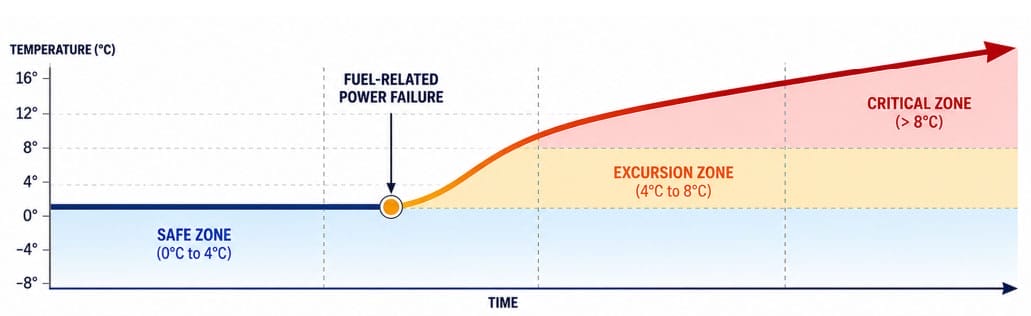

Stage 1: Temperature Excursion Begins
Fuel-related power interruption causes refrigeration to lose consistency. Temperature inside cold storage or a refrigerated trailer begins to rise. The window for safe product recovery narrows immediately.

Stage 2: Product Integrity Compromised
Depending on the product and excursion duration, spoilage begins. Perishable goods move toward the threshold of unsellable or unsafe product. The clock is running.

Stage 3: Compliance and Documentation Triggered
A temperature excursion in a regulated food environment triggers mandatory documentation, potential product hold, and possible regulatory notification. Impact expands beyond the original failure point.

Stage 4: Customer and Financial Consequences
Spoiled product means write-offs and customer penalty charges. If the excursion involved product at a customer facility, reputational and contractual consequences compound further.
In food processing and distribution, the cost of a cold chain failure is never just the product you lose. It is the trust you spend years building.
What a Fuel-Related Cold Chain Failure Really Costs
The cost of a cold chain failure triggered by fuel issues compounds at every level. Here is how it breaks down for the operations I work with.

Immediate Costs
- Spoiled or compromised product write-offs
- Emergency fuel system repair or generator service
- Expedited alternative cold storage or transport arrangements

Short-Term Costs
- Regulatory documentation and potential inspection costs
- Replacement product procurement to fulfill customer commitments
- Fuel system remediation across vehicles and facility tanks

Operational Costs
- Production schedule disruption from power interruptions
- Dispatch disruption from refrigerated vehicle failures
- Increased overhead managing the recovery window

Long-Term Costs
- Customer penalty charges and contract renegotiation
- Reputational damage where food safety failures become public
- Insurance and liability exposure from documented excursions
For food processors and distributors, the difference between a managed fuel system and an unmanaged one is often the difference between a minor maintenance event and a major operational crisis.
Is Your Fuel System Ready to Protect Your Cold Chain?
Cold chain reliability starts with the fuel systems that power it. Use this checklist to assess whether your fuel quality is protecting your cold chain, or quietly putting it at risk.
- Test diesel across all facility storage tanks and vehicle fuel systems for water, microbial growth, and oxidation
- Establish a proactive fuel maintenance cadence for backup generators and refrigeration power systems
- Monitor fuel consumption and power output anomalies in refrigeration units for early warning signs
- Inspect and replace fuel filters across all refrigerated vehicles and facility generators on a scheduled basis
- Enroll facility and transport fuel in an additive program to maintain combustion stability under continuous load
- Know your fuel condition before every production run and every refrigerated dispatch
If you cannot confidently check every box, your cold chain has a hidden exposure. That is the gap we built FleetCore360 to close.
How FleetCore360 Protects Food Operations From the Fuel Up
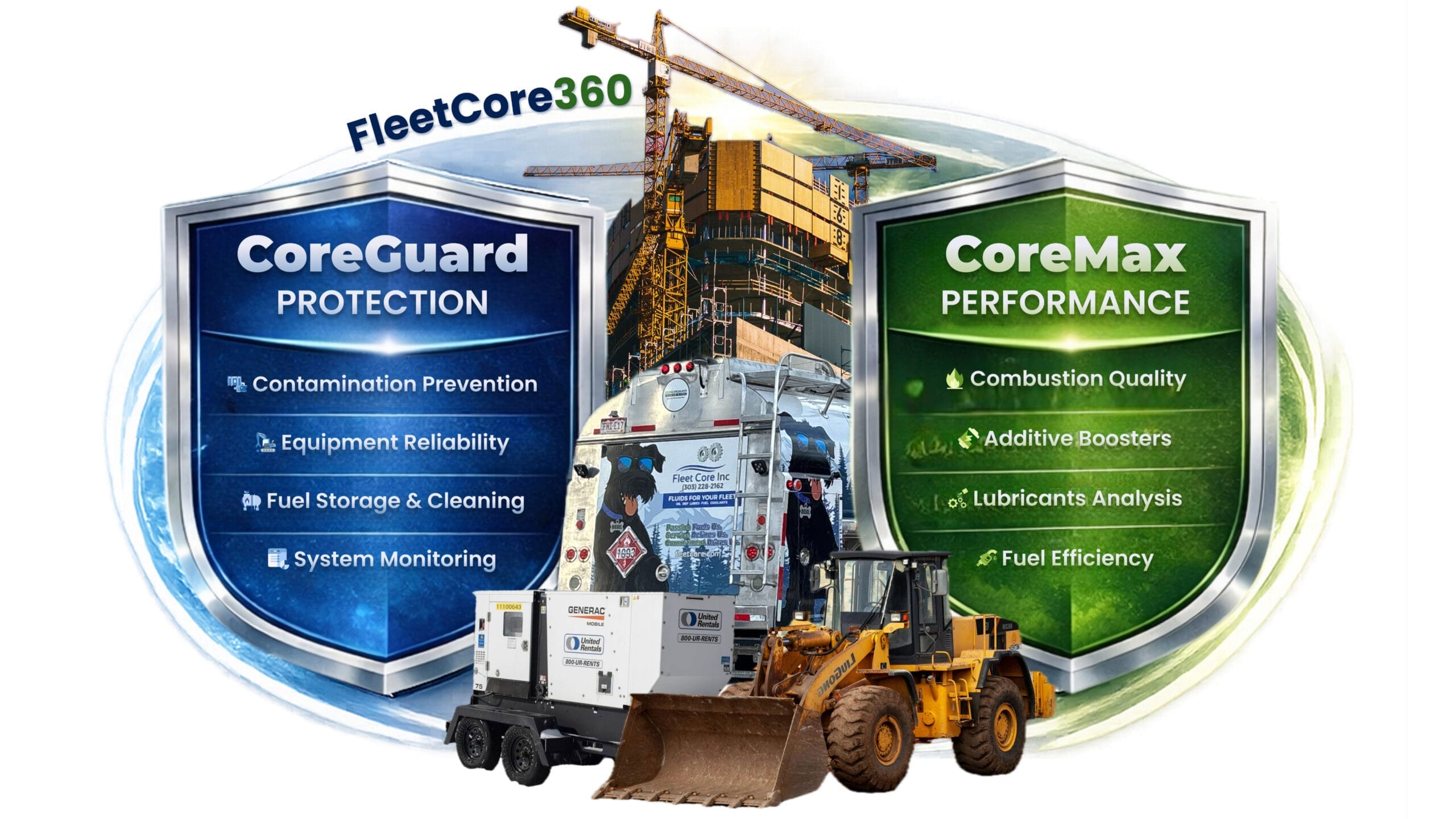
FleetCore360 is our Integrated Fuel Asset Management System. We built it to protect food processing and distribution operations from the fuel-related failures that put cold chains, product integrity, and compliance at risk.
It works in two coordinated layers.
CoreGuard Protection
CoreGuard handles the defensive side of fuel management. We test diesel for cold chain readiness, detect contamination in generators, polish and clean fuel, maintain facility and fleet tanks, prevent water intrusion, and respond to emergencies 24/7.
CoreMax Performance
CoreMax handles the performance side. We deliver combustion stability for refrigeration compressors, generator power reliability, additive programs built for cold operations, refrigeration unit fuel protection, continuous load performance, and ongoing fuel efficiency optimization.